SUMMATIVE AND FORMATIVE ASSESSMENT
First, let's review some basic notions:
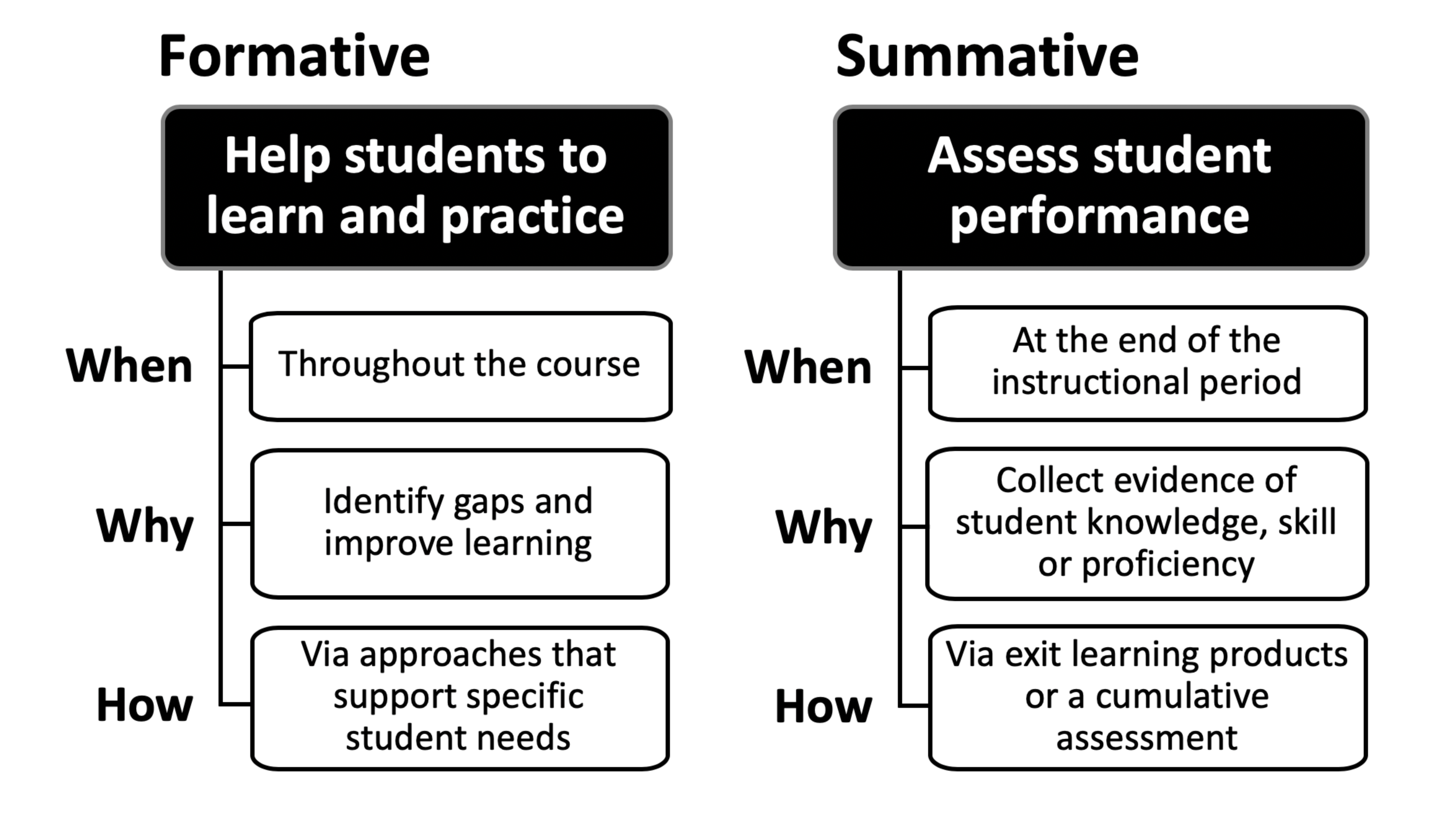
Summative assessment
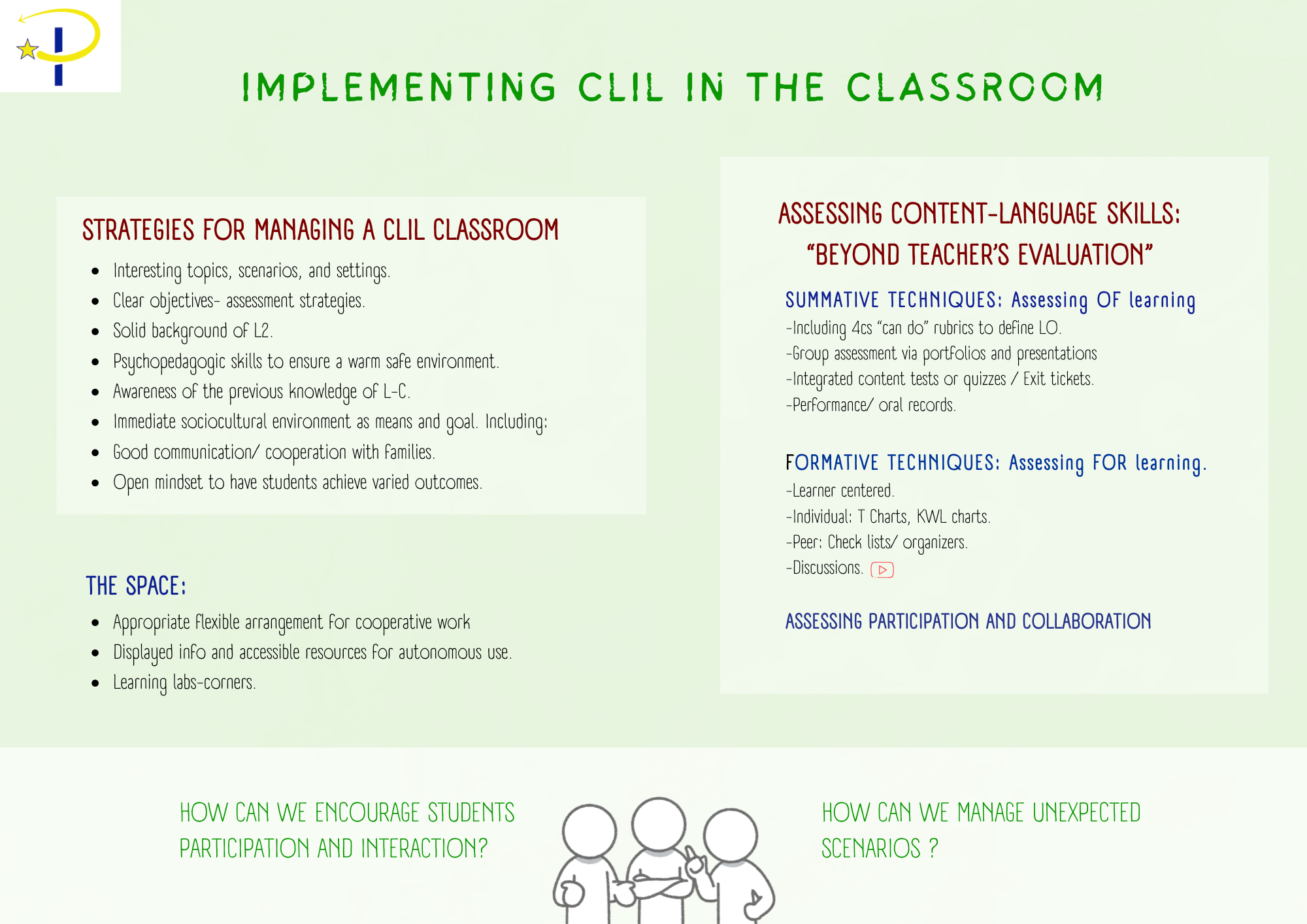
CLIL is a learner-centered approach where a "results" assessment given to them by teachers at the end of a lesson is a poor way to call their responsibility over their learning process out.
It doesn't mean we must forget about it, though. Classic and modern summative tools will accomplish their own mission: offer objective quality-quantity measures to be informed and inform about individual and group performance.
Formative assessment
This style matches beforehand much better with CLIL's nature, gathering information while the lesson is till in progress to decide if introducing some changes will lead us to better outcomes. Maybe because we didn't make right choices about the language, the content, the tasks or the timing... or perhaps because learners, by any other intrinsic reasons are moving too fast or to slow through it, or are simply getting lost in any way.
Learners can perfectly get involved in summative assessment to be better aware of their own/their classmates achievements. However, if we can have them involved in formative assessment, we will give them the chance to re-think about their own strategies, decisions, pace, difficulties, strengths... and suggest some changes as well.
Formative self-assessment is a HOT itself. So, we shouldn't let this opportunity pass by and design our lessons bringing attractive, manageable resources for them to be aware of the whole process and not only of their final results.
TYPES OF TOOLS:
Oral or written, paper or computer based, individual or collective:
-Initial assessment:Applied at the beginning, they will provide us with our students' previous ideas/ skills.
-Formative assessment: Applied along the lesson, they will give us valuable feedback on "how well we are doing so far".
-Summative assessment: Applied at the end of a lesson and including measurable rubrics, they will tell us "how well we did".
Having in mind the previous chapter: Formative assessment gives us the opportunity to praise students with a higher affective filter for their implication and to boost their confidence to keep on going.
In any case, awareness always lead us to independence. So, the more the learners are implied on the discovery of their abilities and difficulties, the sooner they will get to know themselves and start to make decisions regarding their priorities, needs, wishes, time, etc.
This is how we foster the Key Competences for a Long-life Learning: mainly entrepreneurship, personal, social, and learn-to-learn skills.