We are going to continue designing our lesson plans: We had already set a context, defined our lesson aims, and thought about some activities to reach them -including some strategies to support the comprehension and use of the L2 and to scaffold the contents.
Now it is time to look for interesting materials that might help our students to participate actively in the tasks and to reach the lessons' goals:
- Think about resources we already know or that we normally use, assess their appropriacy, and make the necessary adaptations to make the most of them.
- Choose at least one multimedia tool to make sure that a minimum interaction is shown by least active-collaborative learners.
- Design at least one original material for your unique lesson plan.
Here is the main aspects seen so far about "CLIL materials":
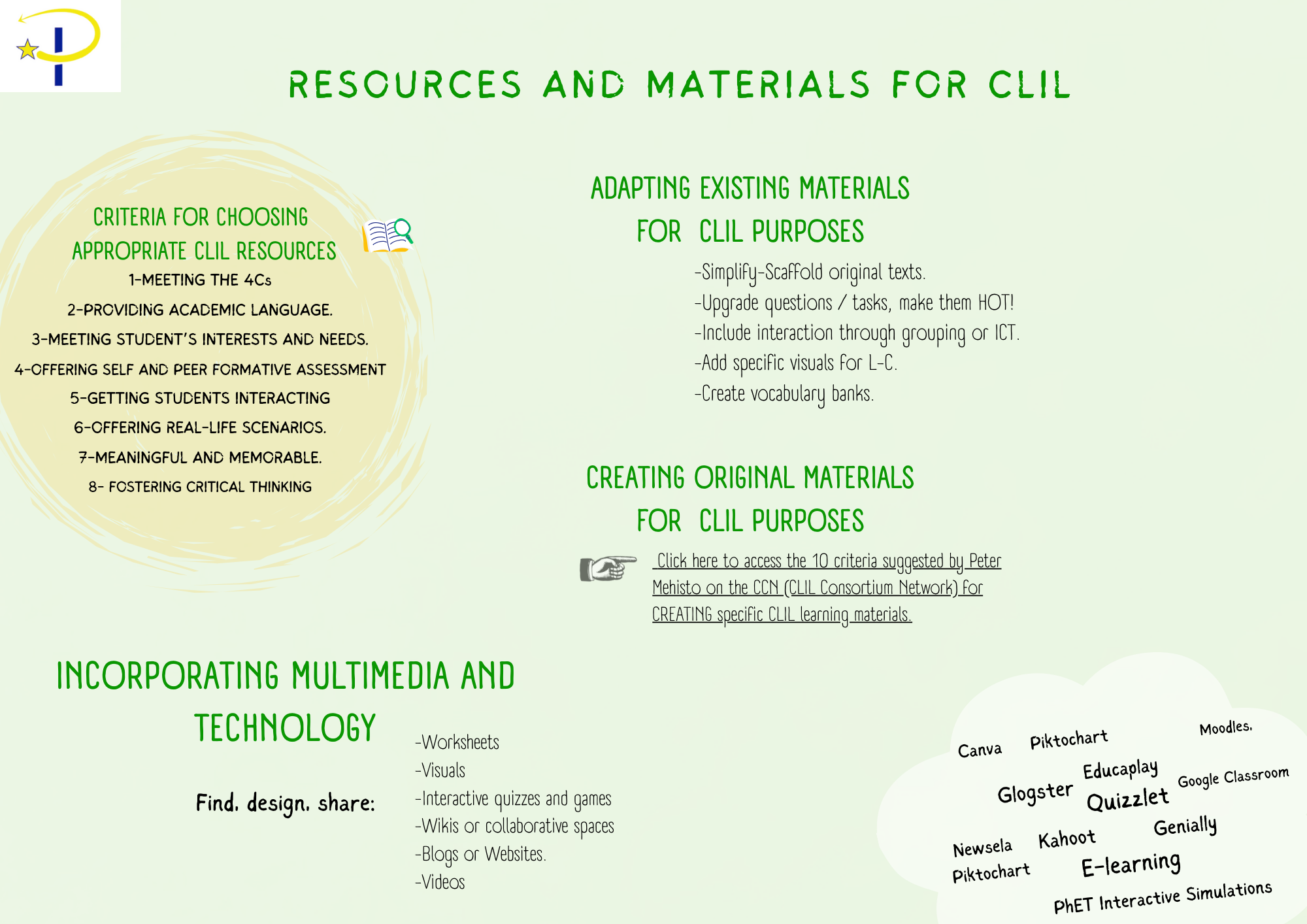
Here is a link to a recommended reading about CLIL materials where we can find -among other details- the 10 criteria suggested by Peter Mehisto to create specific CLIL materials:
1. Making the learning intentions (language, content, learning skills) and process visible.
2. Systematically fostering academic language proficiency.
3. Fostering learning skills development and learner autonomy.
4. Including self, peer and other types of formative assessment.
5. Helping create a safe learning environment.
6. Fostering cooperative learning.
7. Seeking ways of incorporating authentic language and authentic language use.
8. Fostering critical thinking.
9. Fostering cognitive fluency through scaffolding of a) content, b) language, c) learning skills development.
10. Helping to make learning meaningful.
"In fact, to truly realise the added value of CLIL, teachers need to embrace a new paradigm of teaching and learning and they need tools and templates that help them plan their lessons and create/adapt their materials."
And... I couldn't agree with it more.
So, hands-on to design our originals!